Rebuilding steps into Grade II* Greek Chapel
St Stepthens Chapel, West Norwood - Specialist Subcontractors to SSH Conservation
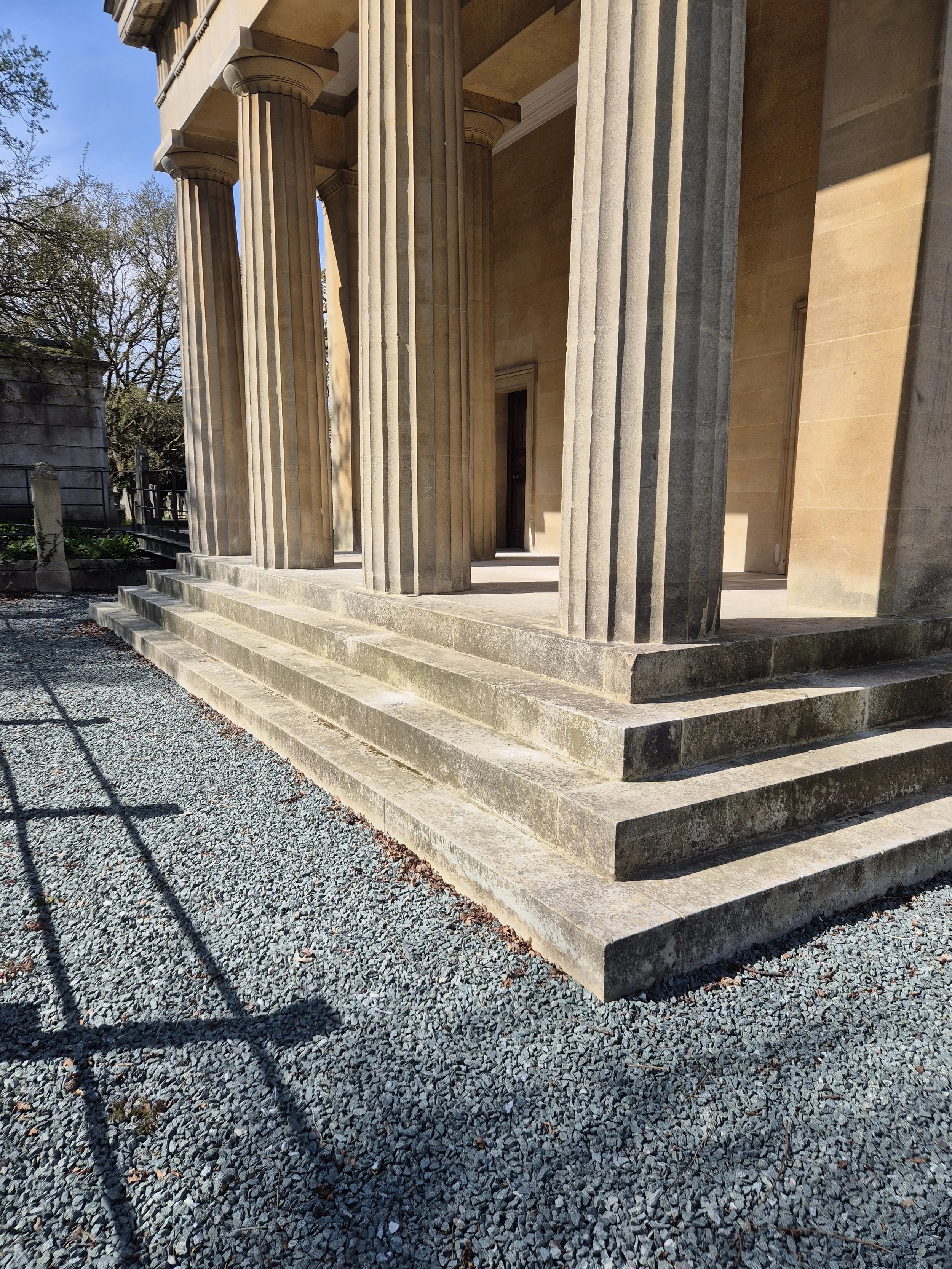
We dismantled a set of Portland steps for a large underpinning programme for a Limestone portico subsiding in London clay.
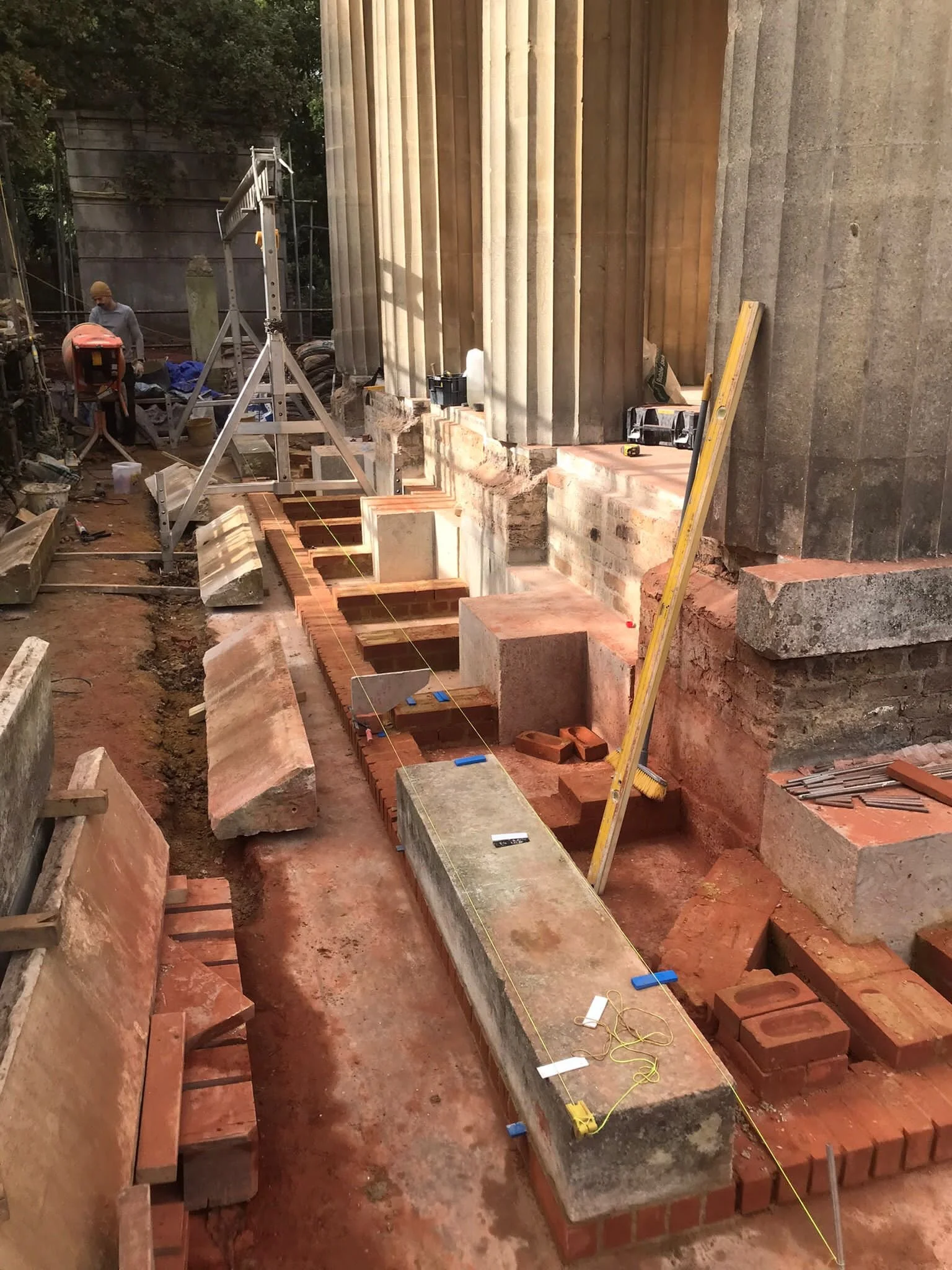
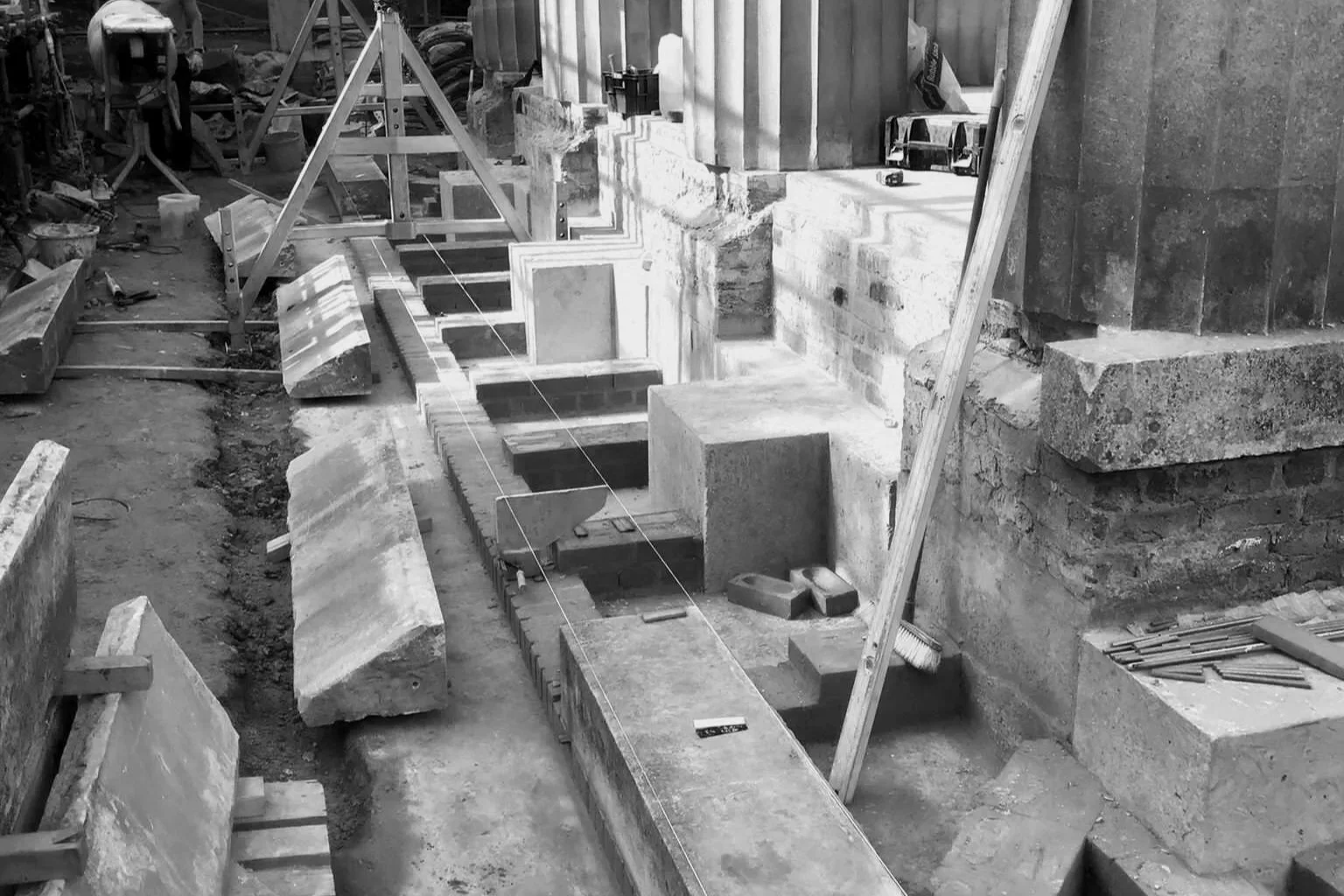
Following the insertion of 18 no. screw piles at up to 6m deep, the heads were encased in a reinforced cage and poured with C25 concrete. We began by setting out the brickwork. This is to prevent any poured concrete being visible in the undulating ground levels of the cemetery.
The stones were labelled during dismantling and stored adjacent to the work area on a loading area elevated above the listed perimeter wall. Due to the chest tombs and headstones, we had to use an aluminium gantry to manoeuvre the stones from the loading area into position.
The steps were triangular; to build these back successfully, spine walls had to be constructed of brick at the joint lines and centre lines of the steps. These bricks were shaped to allow for a 10mm bed of mortar underneath
The challenge of most rebuilding of historic masonry is that it is very rarely plumb or level, and the landing of this portico was the same – 30mm out of level from one end to another. Therefore, we were forced to project this line past the landing and work backwards from this point. Ensuring when we came to the final course it would pick up the existing landing without any lips causing a trip hazard. We did this with a combination of laser levels, string lines and plumb lines.
On Completion, we met the landing successfully. We were able to maintain tight bed joints throughout; this was testament to our rigorous checking of levels as we progressed and accuracy of setting out.
The steps themselves we bedded on a well graded fine aggregate: NHL 2 mix.
Each step was dowelled to each other and in regular intervals they were sat on deeply embedded SS rods into the brickwork spine walls. These were set into anchor resin as per the SE specification. They were pointed with the addition of stone dust into the mix to create a better colour match for the original stone.