
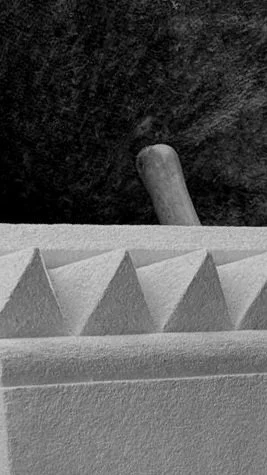
Stone indents and Poulticing
St Matthews, Bayswater - Specialist Subcontractors to SSH Conservation
St Matthews in Bayswater London is a very impressive church, formed from heavily carved Limestone, ornate window heads and pitched faced walling. The impressive façade had blackened due to pollution, sulphation had multiplied on most stone faces, in particular sheltered areas – the sulphation had formed like thick crustations on the surface. Thick Sulphation was collecting water and prevent the drying of stonework, prolonged saturation of the Limestone along with freeze thaw cycles can cause the heavy detailed stonework to deteriorate.
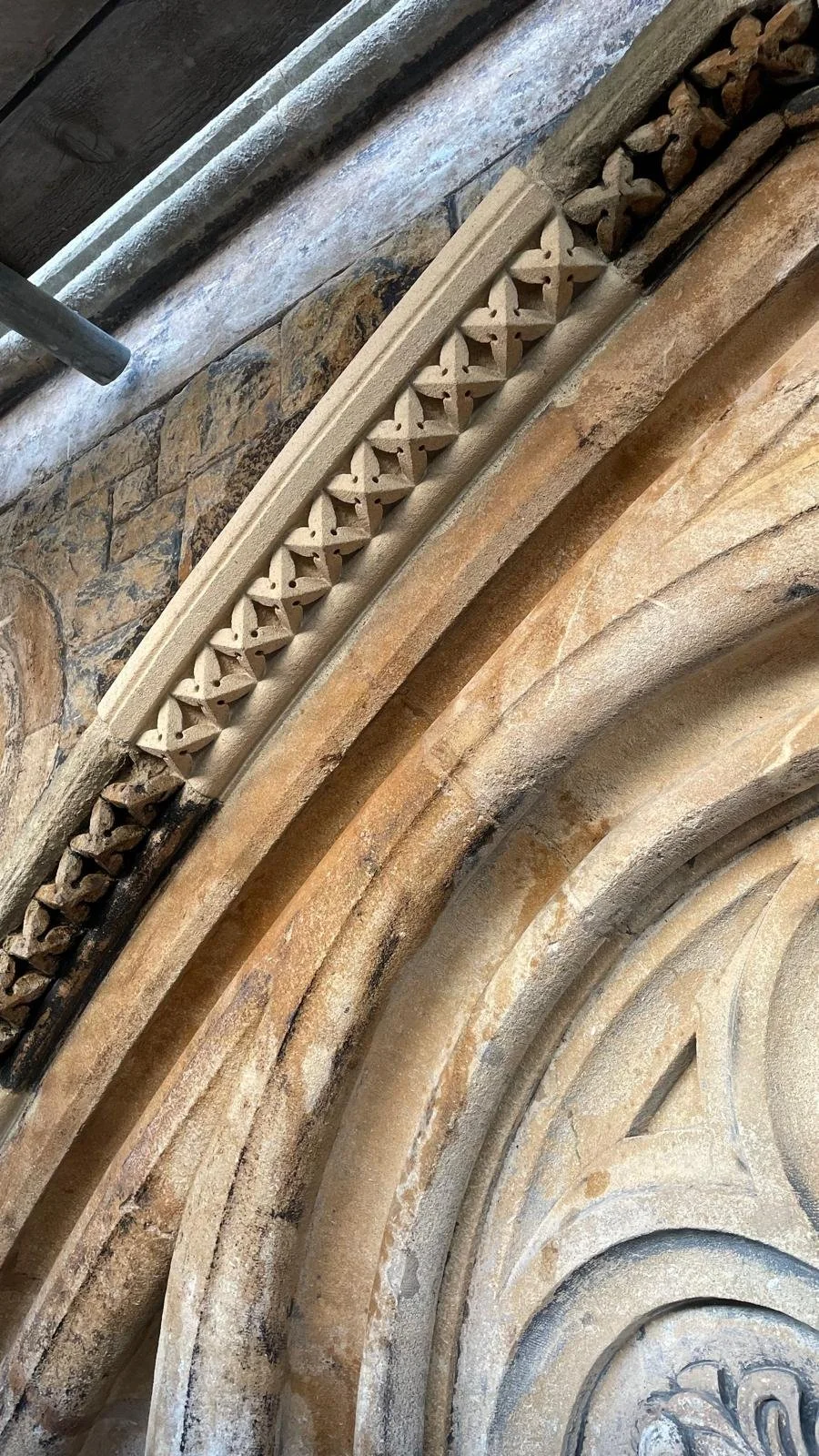
A large proportion of our works at the church were removing these sections of stonework, replacing with hand carved stone elements like you see above. All were chopped out with care, maintaining tight joints, these were bedded using a lime putty and fine sand. Where indents didn’t have sufficient embedment or excessive overhang – the use of stainless-steel dowels and restraints were specified.
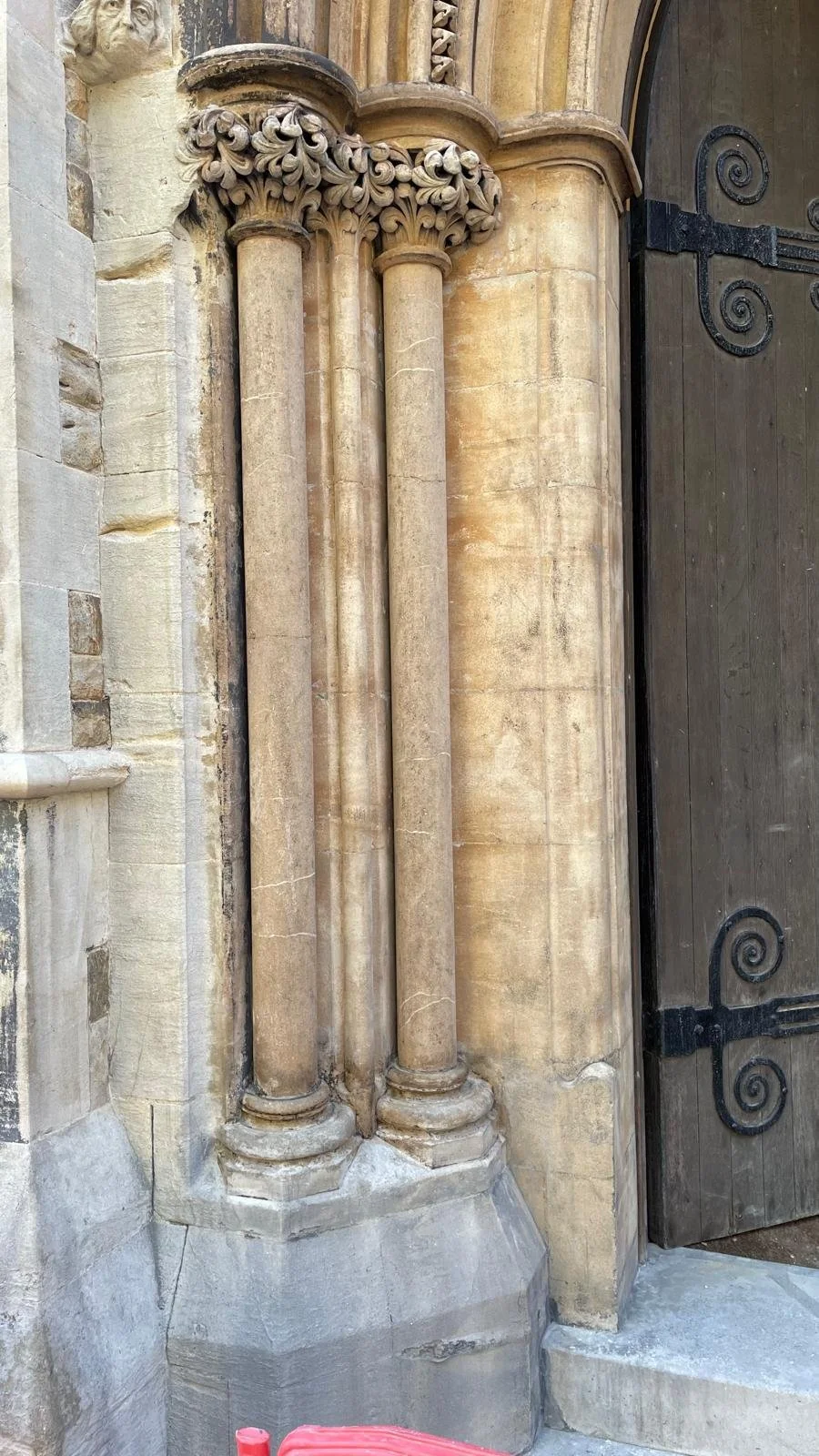
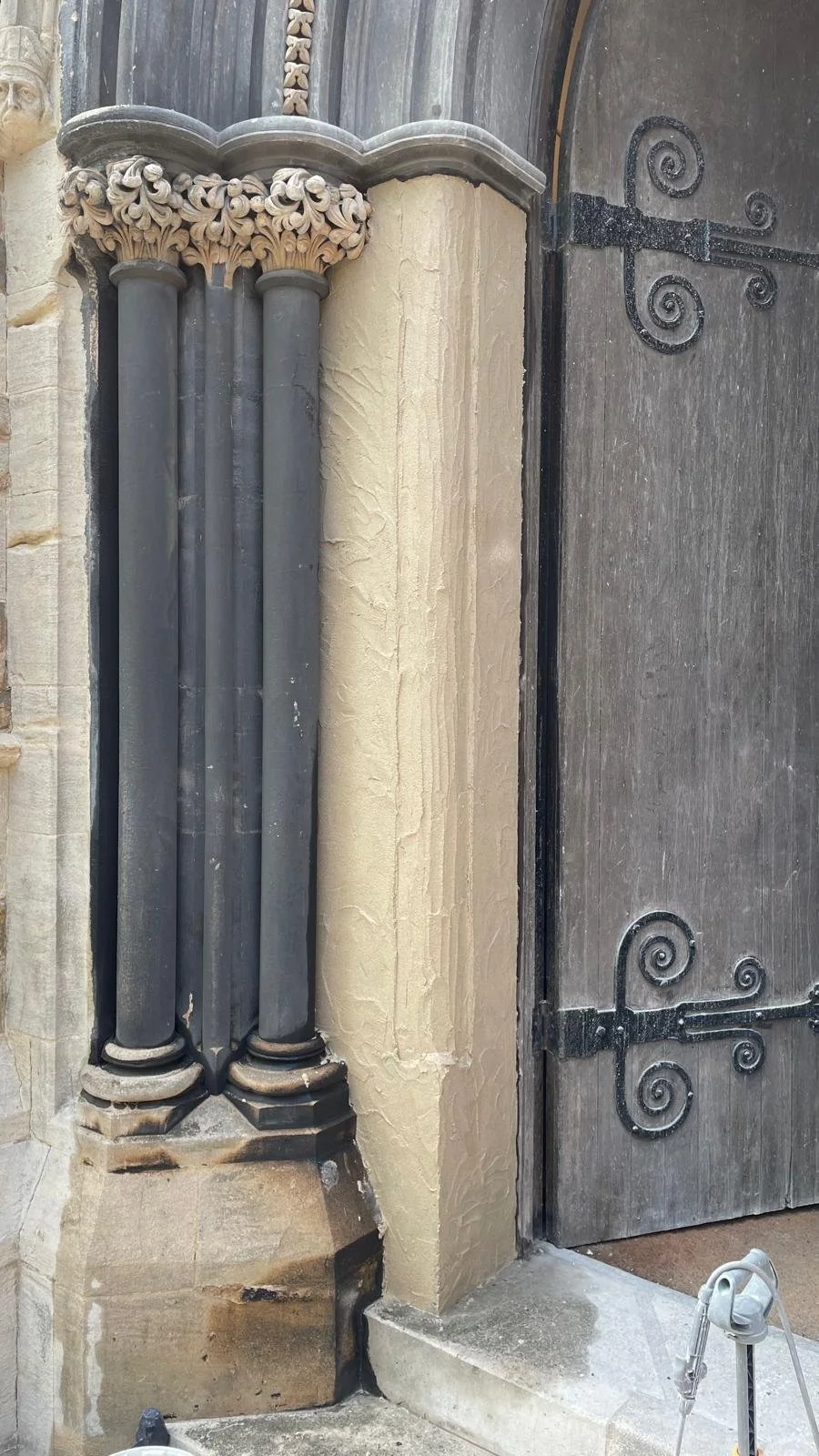
Above you can see how darkened the fine face of the entrance pillars were due to deposits of sulphation on the surface. In sheltered areas like within the capital or at the base of the plinths, these deposits would be thick enough to chisel off by hand. The columns themselves were manually scraped with a tungsten scraper to bring off much of the sulphation.
Following on from this the area was brushed clean, dampened and then an active ammonium poultice was applied to the surface and covered to dwell. This active poultice reacts with the sulphation on a chemical level, changing it from an insoluble compound to a soluble one. Once the poultice had dried it was scraped off, and the area was agitated with clean cold water and wire brush, before Thermateching clean. This process was repeated on stubborn areas; we would reduce the dwell time to prevent the ammonium bleaching on the surface.